Creative direction is a passion. Using a recent editorial, «Afterwork», shot on the streets of London with high-end tailoring and streetwear pieces, three decisions can be isolated that a photographer specialised in menswear photography must always resolve, whatever the tool in hand — a standard built over two decades directing fashion and beauty campaigns for international brands.
1. Real narrative: the context that turns a garment into a story
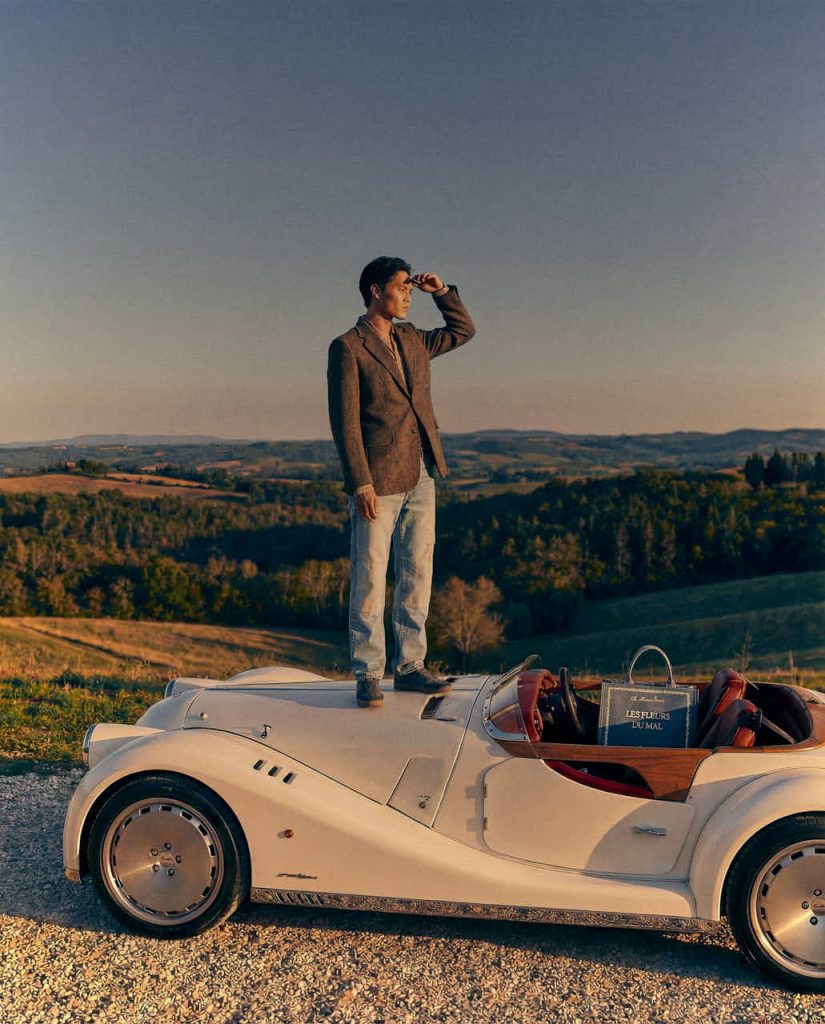
A tailored look against a generic backdrop is a catalogued garment. The same look leaning against a classic convertible, a blurred red bus in the background and a recognisable London façade behind it, is a story. That difference isn’t accidental: it’s a creative direction decision made before the first frame is generated. The director has to choose a location that lends geographic and emotional credibility, not an interchangeable backdrop. When the context is specific and recognisable, the viewer believes the scene — and, by extension, believes the brand. When the background is neutral or repeated, the campaign feels synthetic, however perfectly lit the garment is.
In high-end menswear this narrative is usually built around a moment of the day, a ritual, or a journey — like the «afterwork» thread of this series: someone leaving a professional commitment and crossing the city with the same posture they walked into the meeting room with. That narrative thread is what a marketing director should demand before approving any visual proposal, whether shot on camera or directed with AI.
2. Product fidelity: the texture that survives brand scrutiny
A luxury brand reviews every image pixel by pixel. The weave of a technical fabric, the stitching of a leather jacket, the correct sheen on a vintage bonnet — all of it has to survive the scrutiny of a product team used to approving traditionally photographed campaigns. This is where most undirected generated images fall apart: warped logos, impossible proportions, flat textures that give away the absence of a real reference.
Serious creative direction for luxury menswear photography anchors product geometry — either with a physical reference captured before generation, or with a documented protocol recording every decision on texture, proportion and material behaviour under light. That documentation isn’t a technical formality: it’s what lets you defend authorship of the result when the brand, or its legal department, asks who actually directed the image.
3. Art direction consistency: the visual system holding the campaign together
Getting one spectacular image is relatively easy. Holding the same colour grade, the same vertical editorial framing, the same restrained body language and the same warm temperature across a full editorial, numbered like pages of a real publication, is what separates a campaign from a lucky shot. In «Afterwork» every image could stand alone, but together they build a system: the same cover typography, the same amber London-dusk palette, the same unhurried rhythm of a man in no hurry to get anywhere.
That coherence is the creative director’s signature. A marketing director reviewing thirty loose images might find three or four good ones. A creative director delivers a series where every frame speaks in the same voice — and that consistency is precisely what a brand pays for when it hires senior direction instead of generic content.
Transparency: the question every brand will ask before signing
The editorial itself carries a visible disclosure: AI-assisted creative direction recreations, inspired by editorial public-domain runway silhouettes, not physical garments supplied by any brand. That transparency isn’t an awkward legal concession — it’s a competitive advantage. The debate has intensified since Vogue published its first campaign featuring an AI-generated model with a barely visible disclosure, sparking an open industry discussion about consent and unrealistic beauty standards across the fashion sector. Creative direction that documents its process and declares it clearly gets ahead of that expectation before a client, a regulator, or a reader has to ask. [1]
For a creative or marketing director evaluating AI-assisted menswear photography for their next campaign, the question is no longer whether the tool can generate a beautiful image. It’s whether a documented, defensible, repeatable creative direction for menswear stands behind it, campaign after campaign. You can see the full protocol applied to fashion and beauty on Julio Bárcena Studio’s AI visuals page.
Frequently asked questions
What is creative direction in menswear photography?
It’s the set of decisions — narrative, location, product, light, colour and visual pacing — a photographer or art director makes before shooting or generating an image, turning a garment into a story the brand and its audience recognise.
Can menswear creative direction work with AI-generated images?
Yes, provided a documented creative direction protocol exists. Without that documentation there’s no defensible authorship over the result — something more brands and their legal teams now require before approving a campaign.
How does a photographer guarantee product fidelity in an AI-generated luxury image?
By anchoring the product’s real geometry — texture, stitching, proportion — through physical reference or a documented protocol before generating any frame, avoiding the distortion and lack of fidelity that give away an undirected image.
Why does visual consistency matter in a menswear campaign?
Because a single striking image can be luck, but a full campaign with the same colour grade, framing and body language is what builds brand recognition and proves there’s an authorial voice behind the whole project.
Looking for documented creative direction for your next menswear campaign? Let’s talk about your project.